
Referrals work in most companies. A strategy — in few.
The company knows whom it wants to meet, who can refer it and how to maintain the relationships that lead to valuable conversations.

The difference is made by a conscious process
Referrals already take part in the growth of many companies. A customer tells a business partner about a proven supplier. An adviser points an entrepreneur to a specialist who fits their situation. Each such introduction shortens the way from need to conversation.
The greatest potential appears when a company treats referrals as an area of management. It sets a goal, identifies the right relationships, clearly communicates the profile of the customer it is looking for and comes back with information about the result.
A referred customer arrives with context and initial trust. They usually reach a decision sooner and negotiate the price itself less often, because someone has already vouched for the provider.
- 98%of companies win customers through referrals
- 3%have a strategy for referrals
BNI research

01How a referral works
A referral starts working before the first conversation
The person referring passes on part of their own credibility. They choose the provider, match them to the need and give both sides a reason to take the contact seriously.
In an ordinary enquiry, the company and the potential customer start by getting to know each other. A referral adds a person who knows both sides or understands the need of one of them well. Their judgement becomes the first quality filter.
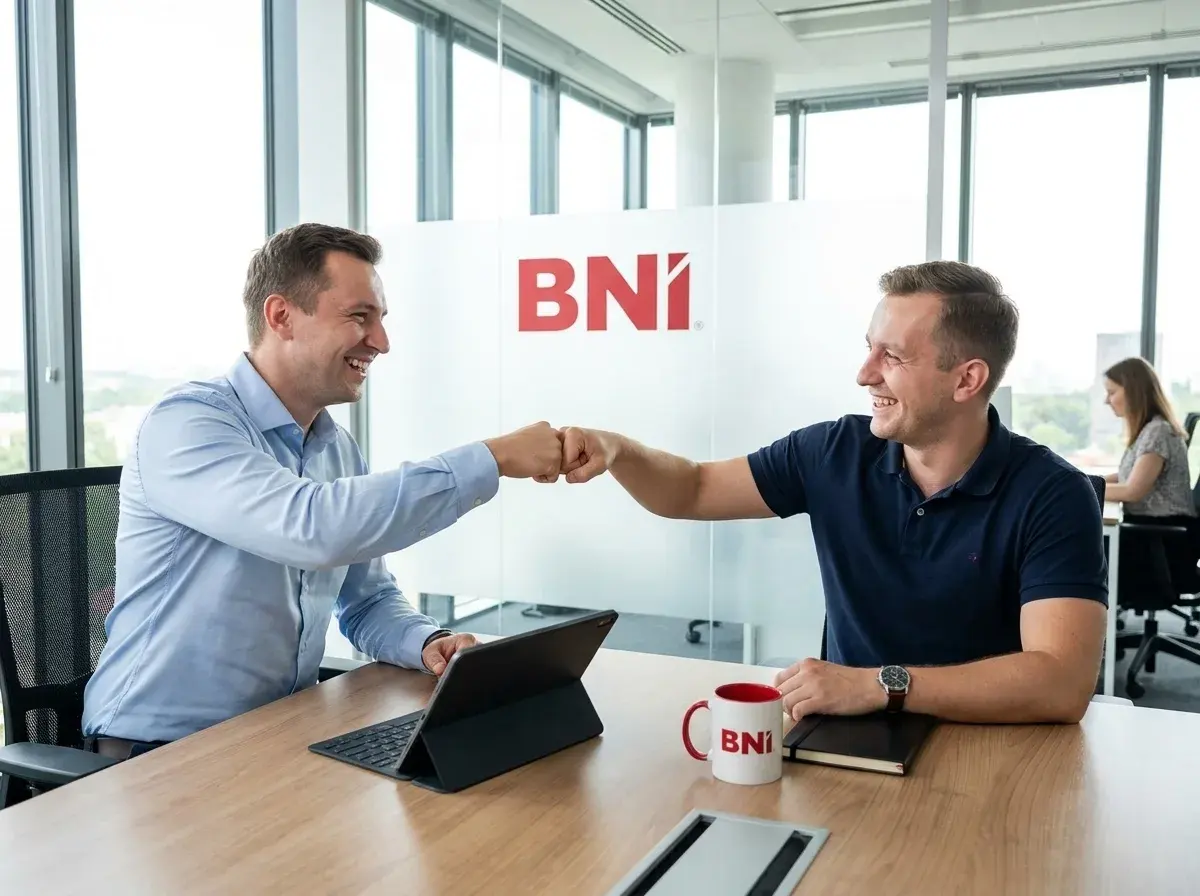
Who takes part in a referral
- The company
Receives a contact set in a specific context.
- The referrer
A person who knows both sides or understands the need of one of them well.
- The customer
Receives a recommendation based on experience or a trusted relationship.
Transferred trust
The most important capital is transferred trust. The referrer uses their own reputation, which is why they care about an accurate match.
Selection before contact
They check whether the problem matches the company’s competence, whether the way of working suits the customer’s expectations and whether both sides have a basis for a conversation.
Focused attention
The potential customer hears the company’s name at the moment they are considering a solution to a specific need. The company enters the decision process with a justification, instead of being an anonymous item on a list.
Responsibility on every side
The referrer takes care of the quality of the introduction. The referred company responds promptly and protects the reputation of the person who recommended it. The potential customer treats the conversation seriously.
02Why referrals remain a matter of chance
A satisfied customer needs a clear picture of whom to refer to you
A good opinion of the company is the beginning. Regular referrals appear when customers and partners understand exactly whom you help, how to recognise the right moment and how to start the contact.
Customers remember the result of the cooperation, but over time they lose the details of the full range of services, new specialisations or the company’s current direction. A strategy provides clear recognition signals.
| A spontaneous referral | A referral strategy |
|---|---|
| A spontaneous referral depends on memory, the moment and chance. | A strategy builds readiness: the right person associates the company with a specific need, understands its value and knows how to open a conversation safely. |
| Partners may rate the competence highly and at the same time associate it with a very broad category. | Instead of a general “I am looking for customers”, there is a description of a specific company, decision-making role, situation or problem. |
| A referral then appears mainly with an obvious need that is fresh in the memory. | The referrer knows which sentence to listen for in a conversation and which context to connect with a given service. |
| Randomness is reinforced by irregular contact. A one-off request quickly gives way to other matters. | A constant, valuable presence refreshes knowledge about the company: it shows current competences, typical customer situations and the direction of the search. |
Referrals start to result from preparation.
03What sets a strategy apart from chance
A referral strategy gives relationships direction
An effective system combines regular contact, a precise profile of the customer you are looking for, reciprocity and measuring results. Each pillar addresses a different source of randomness.
Four pillars of the strategy01–04
 01
0101. Regular contact
A relationship needs continuity so that knowledge about the company stays current. Regular contact reminds partners which problems you solve, where you are developing competences and what kind of conversations are valuable to you today.
 02
0202. A clear definition of whom you are looking for
A good referral profile is specific enough for a person or a situation to be recognised. It covers the type of company, the person’s role, the decision context, the typical need and the signal that appears in conversation.
 03
0303. Reciprocity
A referral network grows through genuine interest in other people’s businesses. Reciprocity means listening attentively, recognising opportunities and connecting people when the connection makes sense.
 04
0404. Measuring results
Measurement shows how the strategy is working. The company records the source of the referral, the level of fit, the stage of the conversation, the result and the feedback for the referrer.
Givers Gain®: those who give, gain
The practical dimension of this principle is consistently creating value for others, without treating a single referral as an immediate exchange. Trust grows through actions, and the results appear in the network of relationships in many ways.
04How to turn the strategy into everyday work
A referral system starts with a specific business goal
The company chooses a direction of growth, describes the right referral, prepares its network to recognise opportunities and closes every conversation with feedback.
The starting point is a business decision. The goal then has to be translated into the language of everyday conversations. A short description helps: whom the company helps, in what situation, which problem it solves and what should happen next.
Business goal
Profile of the right customer
The right relationship
Introduction with context
Conversation
Feedback
Refining the profile
Feedback closes the loop of trust.
05Quality of a referral
A good referral connects the right people for the right reason
A valuable referral contains a fit, consent to contact, a clear reason for the conversation and a simple next step. Its quality is measured by its usefulness to both sides.
Introduction with context01–04
 01
0101. Fit
What counts is the match between the need, the capabilities, the way of working and the moment at which the conversation can bring value.
 02
0202. Consent to contact
The referrer briefly presents the reason for the proposed contact and asks the potential customer whether they are ready to talk.
 03
0303. Reason for the conversation
The introduction itself answers the basic questions: who is being connected with whom, what justifies the contact and which step is expected.
 04
0404. Next step
The reply confirms receipt of the contact, refers to the stated need and proposes a suitable way to talk.
Companies that built their sales on referrals
BNI Members talk about their own companies — what changed and how long it took. Conversations from the “Moja historia w BNI” (My story at BNI) series.
Members on their results
“99% of our customers come from referrals.”
Jarosław Juśkiewicz
“Our customers’ turnover exceeds half a billion zlotys.”
Katarzyna Ludwikowska-Cyganek
“We are not theorists. We have already built 150 touchless car washes.”
Marcin Orlik and Paweł Karcz
“From a one-person company we built the largest architecture studio in Bielsko-Biała.”
Maciej Zuber
“Moja historia w BNI” · 4 conversations
06BNI — a systematic way of learning referrals
BNI turns working with referrals into a competence you develop
BNI is an organisation in which entrepreneurs learn systematically to build trust, communicate business needs precisely, pass on valuable referrals and measure the results of their work.
Members get to know each other’s companies, learn to recognise the right opportunities, practise describing the customer they are looking for and develop a standard of responsible introduction. The scale gives access to diverse experience, and working in a Chapter embeds the principles in regular relationships.
- 70countries
- 350,000Members worldwide
- 20 yearsof developing the model in Poland
- nearly 100Chapters across the country
- around 2,300companies in the community
When you ask entrepreneurs what the best way to win customers is, most answer: referrals. But when we ask: what is your strategy for getting referrals, how many do you want a month, how do you generate them, do you have a budget for it — 9 out of 10 entrepreneurs have no plan at all. […] We teach how to make referrals a system, not a matter of chance.
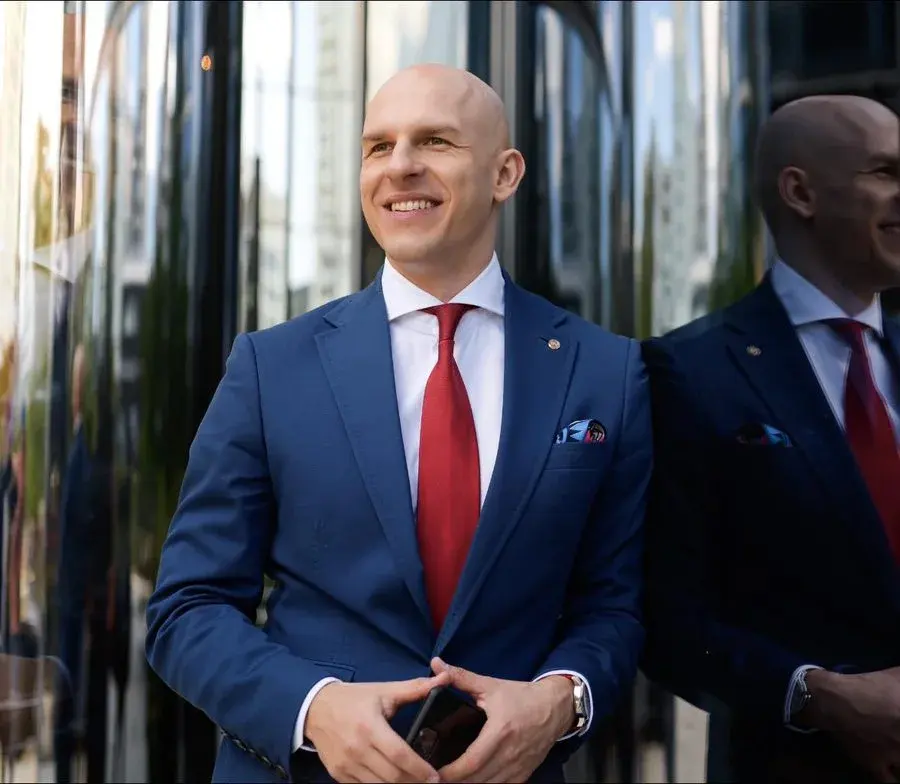 Ryszard ChmuraPresident of the Board of BNI Polska, National Director
See the system in practice
If you want to see the system in practice, get in touch and book a visit; you will settle the details with the Chapter. The full learning path is described on a separate page.

Come as a Visitor
As a Visitor you will get to know how the entrepreneurs work and check whether this form of growth suits your company.
Book a visit to a Chapter
See how we learn
Members get to know each other’s companies, learn to recognise the right opportunities and practise describing the customer they are looking for.
Learning at BNI
Listen to the Members
Conversations from the “Moja historia w BNI” series: entrepreneurs talk about their own companies — what changed and how long it took.
What others say about us